
Blogs and insights
Behind the Scenes: How Our Awning Installation Crew Gets the Job Done
📅 Published on
August 27, 2026
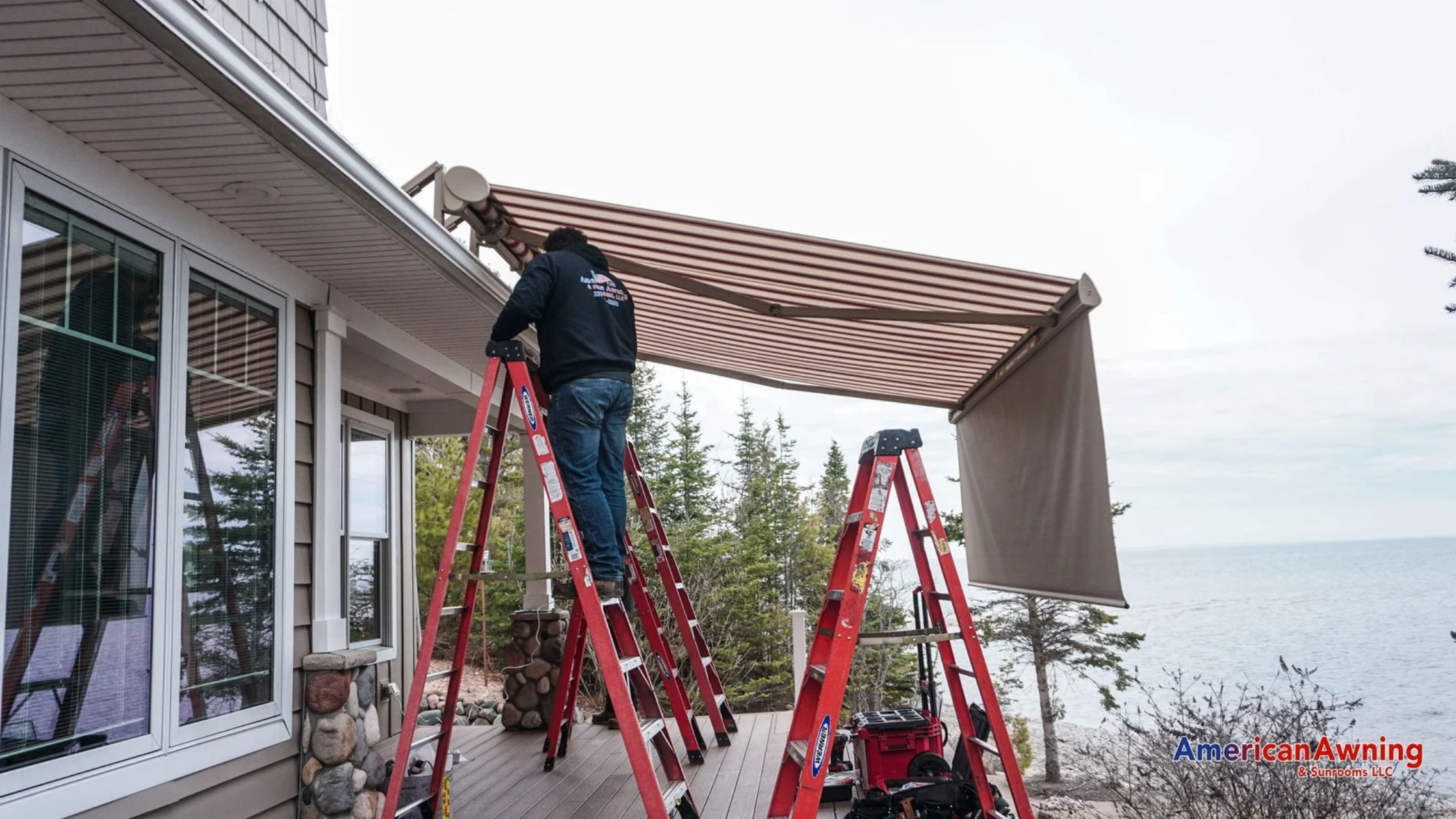
A finished awning can make a new installation look almost effortless. One day, your patio is exposed to the afternoon sun. Then an installation crew arrives, and a few hours later you have a comfortable shaded area ready to enjoy.
What homeowners do not always see is everything that makes that transformation possible.
A professional awning installation involves much more than mounting an awning to the side of a house. Before installation begins, there are measurements to confirm, components to prepare, mounting conditions to evaluate, and a plan to follow. Once the crew reaches the property, careful positioning, secure mounting, adjustments, testing, and final checks all contribute to the finished result.
At American Awning & Sunrooms LLC, our team brings more than 20 years of experience to outdoor living projects across Northern Michigan. Our goal is not simply to install an awning. It is to make sure the finished product fits the home, operates correctly, and gives the homeowner a space they can enjoy with confidence.
So, what actually happens behind the scenes?
Here is a closer look at how an awning installation crew prepares for a project, what happens when they arrive at your home, and why the work done before the awning goes up matters just as much as the finished installation.
A Good Awning Installation Starts Before Installation Day
One of the biggest misconceptions about awning installation is that the project begins when the truck pulls into the driveway.
In reality, a large part of the work has already happened by then.
A professional installation begins by understanding the property, the homeowner's goals, and the area where the awning will be installed. The awning needs to complement the home while providing the amount of shade and coverage the homeowner expects.
That is why American Awning & Sunrooms starts its process with a consultation. The team evaluates the homeowner's needs before creating a customized shade plan with pricing and an expected timeline.
For homeowners who are still deciding which style best fits their outdoor space, our complete awning buying guide provides a useful overview of the factors to consider before moving forward.
Understanding How the Homeowner Wants to Use the Space
Every patio and outdoor living area is different.
One homeowner may want shade over an outdoor dining table. Another may be trying to reduce intense afternoon sunlight coming through windows. Someone else may want a retractable awning that provides shade when needed while allowing full sunlight at other times.
Those differences influence the project.
Before installation, it is important to understand questions such as:
- Where is shade needed most?
- How large is the area that needs coverage?
- When does direct sunlight affect space?
- Does the homeowner prefer a fixed or retractable awning?
- Is motorized operation important?
- How should the awning complement the home's exterior?
This is one reason custom awning solutions are so useful. Instead of treating every property the same way, the project can be planned around the home and the way the outdoor area will actually be used.
Measuring and Evaluating the Installation Area
Accurate measurements are a critical part of preparing for an awning installation.
The crew needs to know more than the approximate width of the patio. The available mounting area, desired coverage, nearby doors and windows, rooflines, exterior features, and other site conditions can all affect the installation plan.
Measurements taken during the planning stage allow the appropriate awning configuration to be selected and help the crew understand what they will encounter on installation day.
Looking Beyond Width and Projection
An awning has to work with the architecture of the home.
For example, the installation area may include windows, exterior lighting, doors, roof overhangs, gutters, or other features that need to be considered. The crew also needs to evaluate the proposed mounting area so the awning can be positioned correctly.
This is where professional experience becomes especially valuable.
A crew that regularly works with different home styles learns to look beyond the most obvious measurements and consider how the entire installation will come together.
For homeowners in the Traverse City area, professional awning installation in Traverse City, MI provides an installation plan tailored to the property rather than relying on a one-size-fits-all approach.
Preparing the Awning Before the Crew Arrives
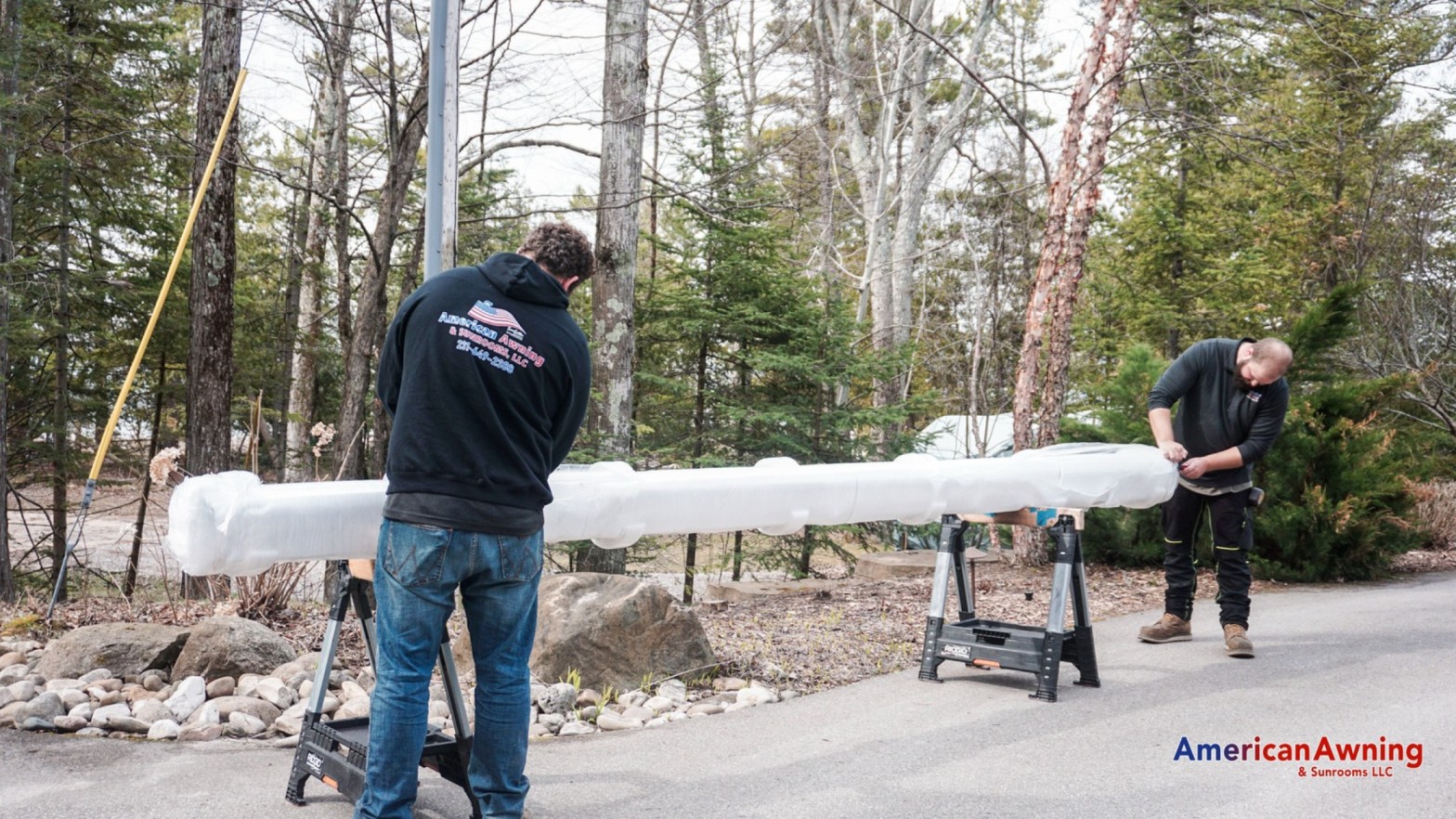
Efficiency on installation day depends heavily on preparation.
Once the project details have been confirmed, the appropriate awning components, mounting hardware, tools, and other materials can be prepared for the job.
This means the crew should not arrive at the property and begin figuring out the project from scratch.
American Awning & Sunrooms' existing installation process reflects this approach. For qualifying same-day projects, materials, hardware, and tools are prepared for the specific job before the crew arrives. That advance preparation is an important reason many standard residential installations can be completed efficiently.
Homeowners interested in the timing of these projects can also read about our same-day awning installation process in Northern Michigan.
Why Preparation Matters So Much
Think of installation day as the visible portion of a much larger process.
Good preparation helps the crew:
- Bring the appropriate components and equipment
- Understand the intended mounting location
- Work from confirmed measurements
- Reduce unnecessary delays
- Follow an organized installation sequence
- Spend more time installing and less time solving preventable problems
That does not mean every installation is identical or that unexpected site conditions can never arise. Homes differ, and conditions sometimes require adjustments.
The difference is that an experienced installation crew arrives prepared for the project they expect to complete.
What Happens When the Installation Crew Arrives?
When installation day finally arrives, the first step is not immediately putting the awning on the wall.
The crew begins by getting oriented to the property and confirming the installation area.
Measurements and placement can be checked against the project plan before mounting begins. The crew can also make sure the work area is accessible and identify anything that needs attention before proceeding.
This verification is an important checkpoint. It gives the installers an opportunity to make sure that what was planned still matches the conditions at the home.
Setting Up the Work Area
An awning installation may require ladders, tools, hardware, awning components, and enough clear space for the crew to work safely and efficiently.
Homeowners can help by moving patio furniture, grills, planters, decorations, and other movable objects away from the immediate installation area before the crew arrives.
Once the area is clear, the installation team can organize its equipment and begin preparing for the mounting process.
This is where all that behind-the-scenes planning starts to become visible.
The measurements have been taken. The awning has been selected. The components are ready. The crew knows the project.
Now it is time to turn that preparation into a finished installation.
Preparing the Mounting Area
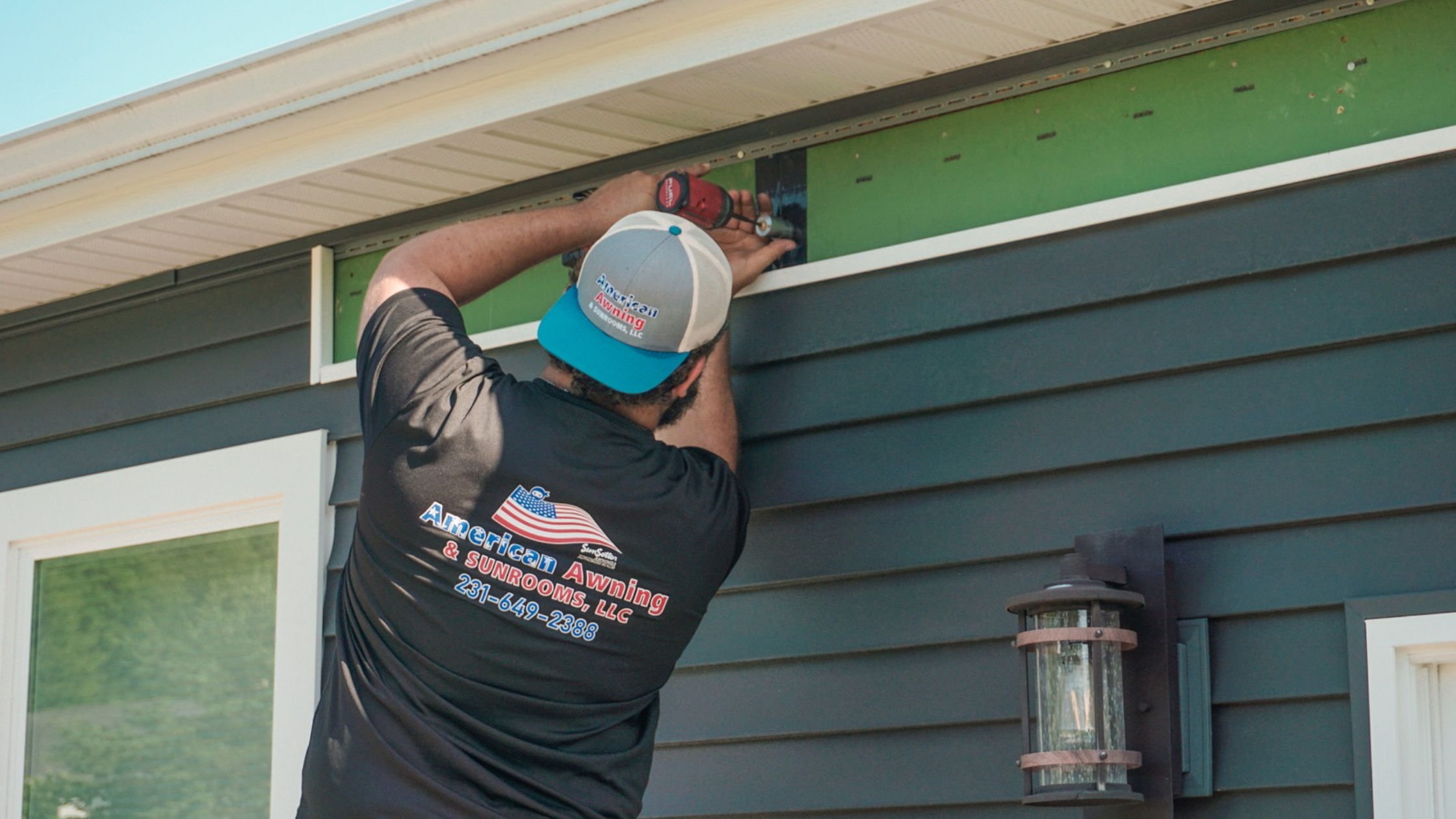
Once the crew has confirmed the installation location, attention turns to one of the most important parts of the entire project: preparing the mounting area.
An awning needs more than an attractive location. It needs to be securely attached so that the system can operate as intended and remain stable during normal use.
The exact installation approach depends on the home, the awning, and the mounting conditions. This is another reason the crew evaluates the property rather than approaching every installation in exactly the same way.
Confirming the Final Position
Before brackets or other mounting components are secured, the crew confirms the final position of the awning.
Placement affects several aspects of the finished project, including:
- The amount of shade provided
- Clearance around doors and windows
- How the awning looks against the home
- How the awning extends over the patio or outdoor area
- The available mounting surface
- How comfortably people can move beneath and around the awning
Small differences in placement can have a noticeable impact once the awning is extended.
Taking time to confirm the position before installation helps the crew get the details right before the mounting process moves forward.
Installing and Securing the Awning
With the installation area prepared and positioning confirmed, the crew can begin mounting the awning.
This is one of the stages where experience matters most.
A professionally installed awning needs to be properly aligned and securely mounted. The crew follows the installation requirements for the specific system while accounting for the conditions of the home.
Depending on the awning and installation, the process can include positioning mounting brackets, securing the appropriate hardware, lifting the awning assembly into position, and making sure the system is correctly seated and aligned.
The goal is not simply to get the awning onto the house. The goal is to create an installation that looks intentional, operates properly, and provides the shade the homeowner expected.
Why Proper Mounting Matters
A retractable awning projects outward from the home when extended. That makes secure mounting a fundamental part of the installation.
Improper positioning or mounting can affect how the system operates and how well it fits the property.
Professional installers understand that the mounting stage deserves careful attention, even when the installation itself can be completed relatively quickly.
That combination of preparation and experience is particularly important when homeowners want an efficient installation without sacrificing workmanship.
American Awning & Sunrooms notes that qualifying projects may be completed in a single day, with the installation itself commonly taking several hours depending on the size and complexity of the project.
The important distinction is that same-day awning installation does not mean rushed installation.
Much of the work that makes an efficient installation possible has already taken place before the crew reaches the property.
Teamwork Makes the Installation More Efficient
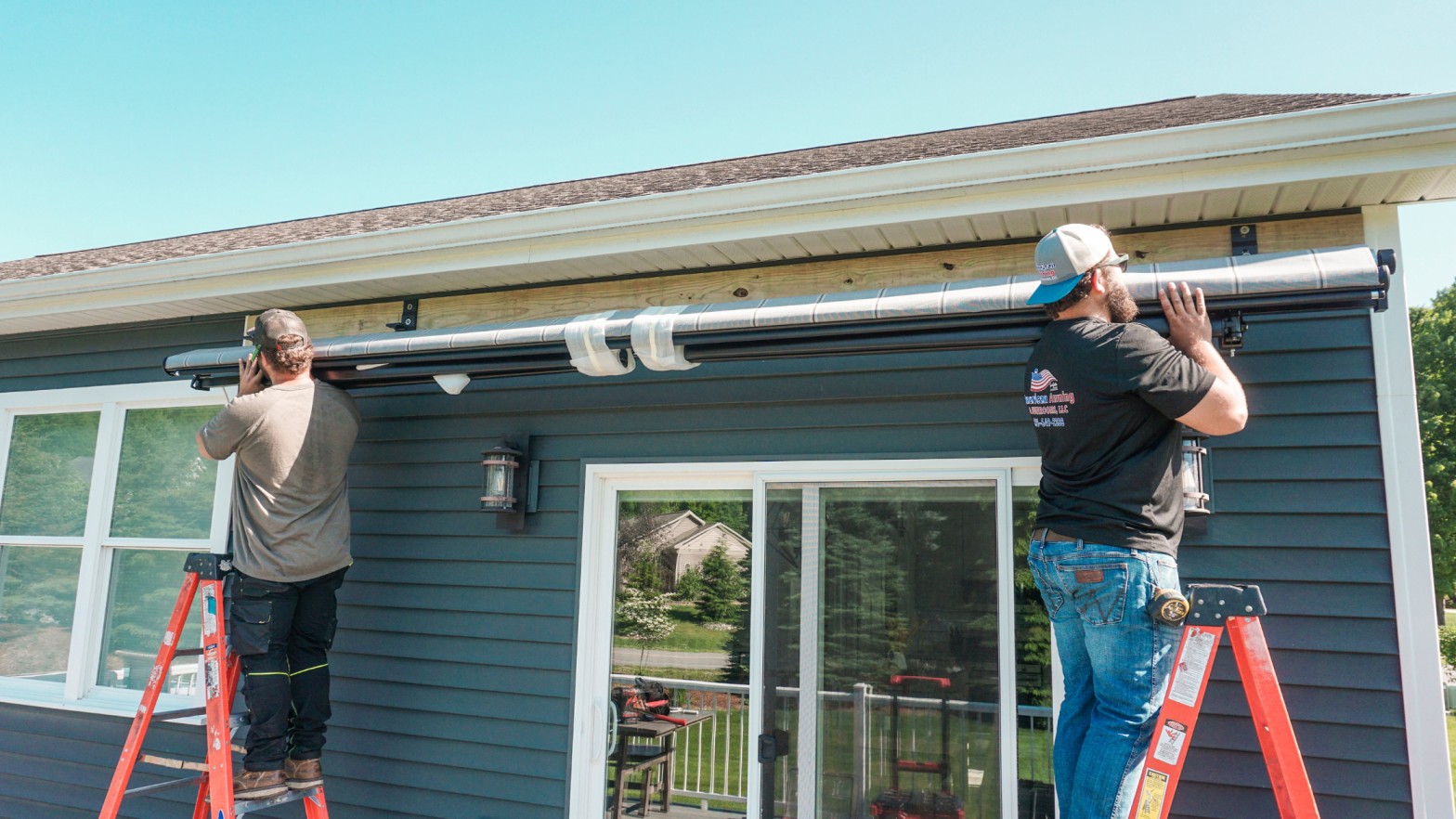
Behind every efficient installation is a crew that knows how to work together.
Awning systems can be large, and certain stages of installation require installers to coordinate their movements carefully. Team members need to know what is happening next, where components need to go, and how to keep the project moving without sacrificing attention to detail.
Experienced crews develop a working rhythm.
One installer may prepare or secure mounting points while another organizes components or verifies positioning. When the awning assembly is ready to be placed, the team can work together to move and position it correctly.
For the homeowner, this coordination may make the process look simple.
It is usually anything but accidental.
Experience Helps the Crew Anticipate the Next Step
Experience is particularly useful because installers become familiar with the sequence of a project.
Instead of repeatedly stopping to determine what happens next, an experienced crew can move logically through the installation.
That familiarity also helps when conditions differ from what was expected.
Homes are not identical. Exterior surfaces, architectural details, accessibility, and existing outdoor features can all vary. A crew that has worked on many properties is better positioned to evaluate those differences and determine how to proceed appropriately.
Retractable Awnings Require More Than Mounting
Retractable awnings add another important element to the installation process: movement.
The system needs to extend and retract correctly after it has been mounted.
That means installation is not finished the moment the awning is attached to the home.
The crew needs to operate the awning and observe its movement.
Depending on the system, adjustments may be necessary to make sure the awning opens and closes as intended.
This testing stage is essential because homeowners are going to interact with the awning repeatedly throughout its life.
A system that looks perfect while closed but does not operate correctly is not a finished installation.
Installing Motorized Awning Systems
Motorized retractable awnings can make outdoor shade especially convenient.
Instead of manually opening and closing the awning, the homeowner can control the system using its intended operating controls.
For these projects, the crew must account for both the physical awning installation and the system's operation.
After installation, the motorized system should be tested through its operating cycle so the crew can confirm that it responds and moves properly.
The homeowner should also understand how to operate the system before the crew leaves.
The technology may make using the awning easier, but proper setup remains an important part of achieving that convenience.
Testing the Awning After Installation
Testing is one of the most important behind-the-scenes steps because it allows the crew to evaluate the installation as an operating system rather than simply as a finished structure.
Once the awning has been mounted, the crew can extend and retract it to observe its movement.
During this process, installers can check areas such as:
- Extension and retraction
- Alignment
- Positioning
- Clearance
- Overall operation
- Motorized controls, when applicable
- The appearance of the awning when extended
- The appearance of the awning when retracted
If an adjustment is required, it can be addressed before the project is considered complete.
This is an important distinction between installation and completion.
The awning may be physically attached to the home, but the job is not truly finished until the crew has confirmed that the system operates as intended.
Making Final Adjustments
Even careful preparation cannot eliminate the need for final adjustments.
Once an awning is installed and operating, the crew has an opportunity to see the complete system in its actual environment.
That is when small adjustments can be made where appropriate.
The installers can look at how the awning sits against the house, how it extends over the intended outdoor area, and whether its operation matches expectations.
This stage may not be the most dramatic part of an installation, but it can make a meaningful difference in the finished result.
It is similar to the final fitting of a custom piece. The major work has been completed, but the details still deserve attention.
Quality Control Before the Crew Packs Up
A professional installation should include a final review before tools and equipment are packed away.
The crew can inspect the completed work, operate the awning again if needed, and confirm that the installation area has been addressed properly.
A final quality check provides one more opportunity to catch something that might otherwise be overlooked.
It also shifts the crew's perspective.
During installation, team members are focused on individual tasks. During the final review, they can look at the project as a whole.
Does the awning sit where it should?
Does it operate correctly?
Does the installation look finished?
Is the homeowner ready to use it?
Those questions help turn a completed installation task into a finished outdoor living project.
What Can Affect Awning Installation Time?
Homeowners often want to know exactly how long their awning installation will take.
There is no single answer that applies to every property.
The installation timeline can depend on factors such as the size and style of the awning, accessibility of the mounting area, installation conditions, and overall project complexity.
The good news is that many residential awning projects can move quickly when the property and system are appropriate for an efficient installation.
American Awning & Sunrooms even has an existing resource specifically covering same-day awning installation in Northern Michigan, which is particularly useful for homeowners who want to understand what makes faster installation possible.
Preparation remains the common denominator.
When measurements are confirmed, materials are ready, and the crew arrives with a clear installation plan, less time needs to be spent solving avoidable issues on site.
What the Homeowner Sees Versus What the Crew Is Doing
From the patio, an installation may appear to follow a simple sequence:
- The crew arrives.
- Equipment comes off the truck.
- The awning goes up.
- The system is tested.
- The crew leaves.
Behind those visible steps is a much more detailed process.
The visible installation may happen relatively quickly. The planning, experience, and coordination behind it are what make that efficiency possible.
From Installation Site to Outdoor Living Space
One of the most satisfying parts of an awning installation is how quickly the character of an outdoor area can change.
Before the installation, a patio may receive too much direct sunlight during the hours when the homeowner would most like to use it.
Once the awning is extended, that same area gains shade and becomes a more comfortable place for outdoor dining, relaxing, entertaining, or spending time with family.
The awning can also become an important visual feature of the home's exterior.
Homeowners considering the aesthetic impact of an awning can explore examples of completed outdoor projects in American Awning & Sunrooms' project gallery.
That transformation is what the homeowner ultimately sees.
What makes it possible is everything that happened before it: consultation, measurements, planning, preparation, secure mounting, teamwork, testing, and final adjustments.
What Homeowners Can Do Before Installation Day
Although the installation crew handles the technical work, homeowners can help make installation day easier with a little preparation.
The most useful step is simply making sure the crew has clear access to the installation area.
Before the installers arrive, consider:
- Moving patio furniture away from the work area
- Relocating grills, planters, decorations, and other movable items
- Keeping children and pets away from the immediate work zone
- Making sure gates or other access points are available
- Removing fragile items near the installation area
- Confirming that vehicles will not block access if the crew needs to bring equipment close to the home
You do not need to prepare the mounting surface or perform any technical work yourself. That is part of the professional awning installation process.
A clear work area simply gives the crew room to organize equipment and concentrate on the project.
Why Professional Awning Installation Matters
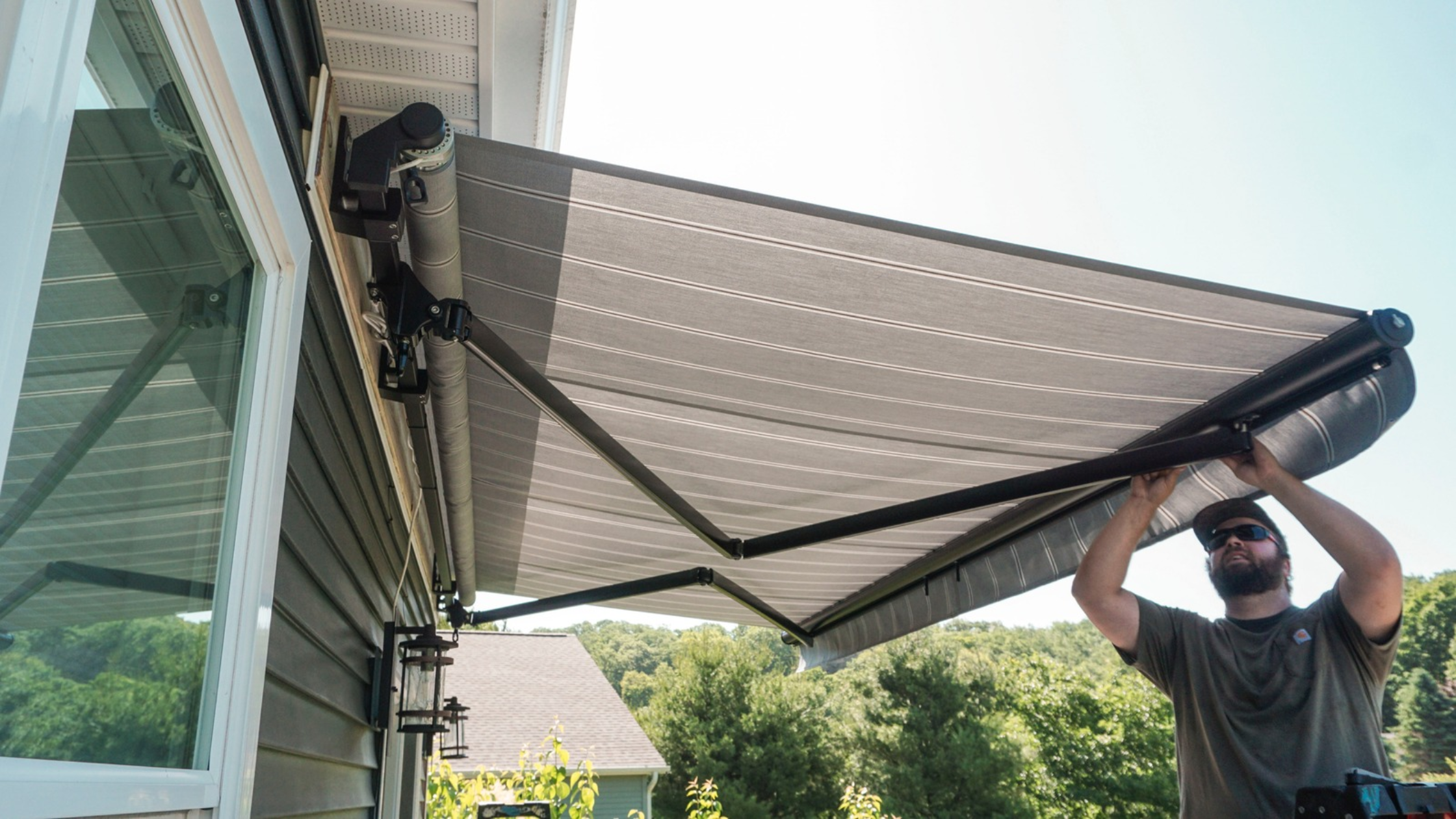
Awnings may look relatively straightforward once they are mounted, but installing one correctly involves several important considerations.
The system needs to be positioned appropriately, securely mounted, aligned, adjusted, and tested. Retractable systems also need to move properly after installation, while motorized systems require additional operational checks.
Professional installation brings those steps together.
More importantly, it gives homeowners the benefit of a team that works with awnings regularly and understands the complete process from initial planning through final testing.
Installation Is Part of the Overall Awning Investment
When homeowners compare awnings, much of the initial attention naturally goes toward the product itself.
Fabric colors, frame styles, dimensions, controls, and other options are exciting because they determine what the finished awning will look like.
Installation deserves just as much consideration.
Even a quality awning depends on proper placement and installation to perform as intended. Professional installers understand how the product and property need to work together.
That makes installation part of the investment rather than simply the final step after buying the awning.
The Difference Experience Makes on the Job
No two houses are exactly alike.
Even properties that appear similar from the street can present different installation conditions once the crew begins evaluating exterior features, mounting areas, accessibility, and the layout of the outdoor space.
Experience helps installers recognize those differences.
A crew that regularly completes awning projects has encountered a range of homes, patio configurations, and installation conditions. That experience helps the team approach each project methodically rather than treating the installation like an unfamiliar task.
It also helps the crew communicate and work together efficiently.
The result is a process that can feel surprisingly straightforward to the homeowner, even though a great deal of planning and coordination is happening behind the scenes.
More Than Two Decades of Outdoor Living Experience
For homeowners, one of the reassuring parts of hiring a professional installer is knowing that the people working on the property understand the products they install.
American Awning & Sunrooms LLC has been serving Northern Michigan for more than 20 years, with outdoor living solutions that include awnings, sunrooms, pergolas, and related products.
That experience is especially relevant when an installation needs to account for the individual characteristics of a home.
Rather than simply delivering a product, the process includes evaluating the homeowner's needs, creating a customized plan, and professionally installing the selected solution.
If you are ready to discuss a project of your own, you can schedule an appointment with American Awning & Sunrooms. The appointment page is included in the supplied sitemap.
What Happens After the Awning Is Installed?
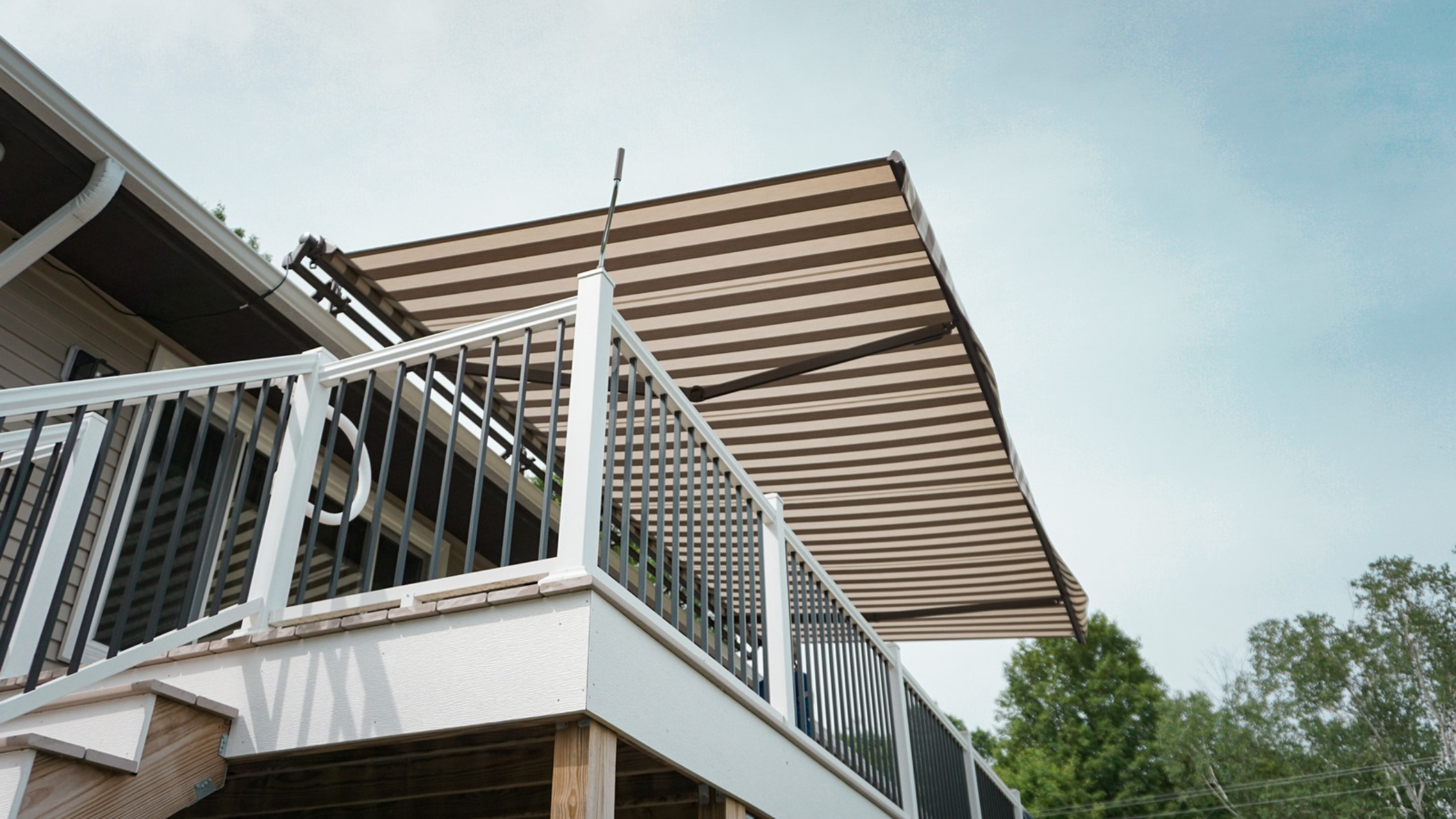
Once the installation and final checks are complete, the homeowner should be ready to start using the awning.
For retractable systems, that includes understanding how to extend and retract the awning correctly.
For motorized systems, the homeowner should also understand how the controls operate.
This handoff is an important part of the experience because the goal is not simply to leave a new awning attached to the home. The homeowner should feel comfortable using it.
It is also a good opportunity to ask any final questions about operation or care.
From there, the installation area can return to what it was intended to be all along: a place to relax, entertain, dine, or simply enjoy more time outdoors.
Frequently Asked Questions About Awning Installation
How long does awning installation take?
Installation time depends on the awning, property, accessibility, and complexity of the project. American Awning & Sunrooms' existing same-day installation resource states that many standard residential installations can be completed within several hours once the crew arrives, while more complex installations may require additional time.
The preparation completed before installation day can play an important role in keeping the on-site process efficient.
Can an awning be installed in one day?
Some projects can.
A standard residential project may qualify for same-day installation when the awning, property, site conditions, and preparation allow it. More complicated installations may take longer.
The priority should always be completing the installation correctly rather than forcing every project into the same timeline.
Do I need to prepare the area before the crew arrives?
You generally do not need to perform technical preparation.
It is helpful, however, to clear furniture, grills, planters, decorations, and other movable objects away from the installation area.
Providing the crew with an open workspace can make setup easier and reduce unnecessary interruptions.
Why are measurements taken before installation?
Measurements help determine how the awning will fit the property and provide the intended coverage.
The crew also needs to consider the available mounting area and surrounding exterior features.
Accurate measurements during planning reduce uncertainty when installation day arrives.
Are retractable awnings tested after installation?
They should be.
Once a retractable awning is installed, operating the system allows the crew to check extension, retraction, alignment, clearance, and overall operation.
Motorized systems also need to be checked to confirm that their controls and movement operate as intended.
What is the benefit of professional awning installation?
Professional installation combines planning, appropriate mounting, positioning, alignment, testing, and final adjustments.
It also gives homeowners access to installers who understand the product and can account for the specific conditions of the property.
Rather than focusing solely on getting the awning attached to the house, professional installation considers how the complete system will function once the project is finished.
What should I consider before choosing an awning?
Start with how you want to use the space.
Think about where you need shade, the size of the area you want to cover, how much flexibility you want, and whether manual or motorized operation makes sense for your household.
Design matters too. The awning becomes part of the exterior appearance of the home, so fabric, dimensions, and overall style should complement the property.
From the Crew's First Measurement to Your First Afternoon in the Shade

When you look at a finished awning, you see shade, color, and a more usable outdoor living space.
An installation crew sees everything that made that finished result possible.
They see the initial measurements, the project plan, the mounting conditions, the prepared components, the equipment, the installation sequence, the adjustments, and the final operational checks.
That is the real story behind professional awning installation.
The best installations often look simple because the preparation has already solved many of the difficult questions before the awning reaches the wall.
American Awning & Sunrooms brings that process to homeowners throughout Northern Michigan, combining customized outdoor living solutions with professional installation.
If your patio or deck could use dependable shade, the first step is figuring out what type of awning will work best for your home and the way you use your outdoor space.
Explore American Awning & Sunrooms' awning options, browse the project gallery for inspiration, or schedule an appointment to start planning your project.


.svg)