
Blogs and insights
Can You Use a Sunroom Year-Round in Michigan? What Homeowners Should Know
📅 Published on
September 28, 2026
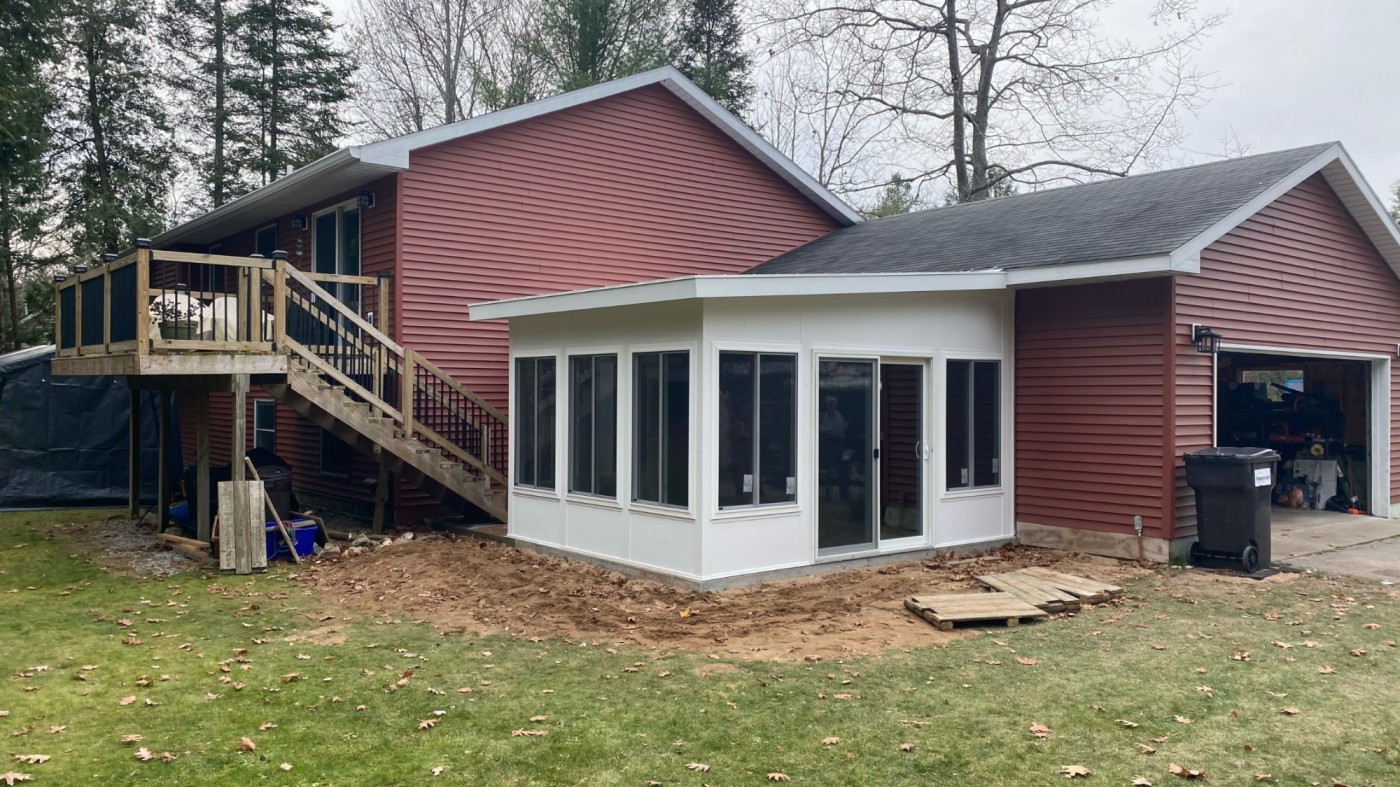
A sunroom can completely change the way you experience your Michigan home. Instead of looking at the backyard through a standard window, you can relax in a bright, glass-filled space that feels connected to the outdoors while remaining protected from wind, rain, insects, and changing weather.
But Northern Michigan homeowners have an important question to answer before planning one: Can you actually use a sunroom year-round in Michigan?
The short answer is yes, if the sunroom is designed for year-round use.
Michigan's climate puts a sunroom through very different conditions over the course of a year. A comfortable July afternoon and a freezing January morning place very different demands on the windows, insulation, roof, floor, framing, and heating system.
That is why simply enclosing a patio or adding a room with lots of windows does not automatically create a four-season living space.
A true year-round sunroom in Michigan needs to be planned around thermal performance as well as appearance. The right combination of insulation, insulated glass, air sealing, structural design, heating, cooling, and other construction details can make it possible to enjoy the room through winter, spring, summer, and fall.
Understanding those differences before construction can help you choose a sunroom that matches the way you actually want to live.
What Does a Year-Round Sunroom Mean in Michigan?
The phrase “year-round sunroom” can sometimes be used loosely.
For Michigan homeowners, it should mean much more than a room that is technically accessible in January. A true year-round room should be designed so it can function as a comfortable living space during both cold winter weather and warm summer conditions.
This type of sunroom is generally referred to as a four-season sunroom.
Unlike a seasonal enclosure, a four-season room is designed with thermal performance in mind. That typically means greater insulation, insulated windows and doors, attention to air leakage, and a way to heat and cool the room.
Current Michigan sunroom companies make the same fundamental distinction. Three-season rooms are generally positioned for spring through fall, while four-season rooms use additional insulation, insulated glazing, and climate control to support year-round use.
American Awning & Sunrooms offers custom sunroom solutions for homeowners who want to expand their living space while maintaining a strong connection with the outdoors.
Year-Round Does Not Mean Every Sunroom Is the Same
Even among four-season rooms, design requirements can differ.
A sunroom facing south with extensive glass may experience substantial solar gain on sunny days. A room surrounded by mature trees may behave differently. The size of the room, its orientation, foundation, window area, roof design, connection to the existing house, and heating and cooling strategy can all affect comfort.
That is why homeowners should be cautious about treating “four-season” as nothing more than a product label.
The entire room needs to work together as a system.
Three-Season vs. Four-Season Sunrooms
The most important distinction is the intended use of the space.
A three-season sunroom is generally designed to extend the portion of the year when you can comfortably enjoy an enclosed outdoor-living area. It can protect you from insects, rain, wind, and other elements while allowing abundant natural light and views.
For many Michigan homeowners, that may be exactly what they want.
A four-season sunroom, on the other hand, is intended to function throughout the year. That means the construction has to account for much colder outdoor temperatures and the need to retain heat during winter, while also helping control heat during summer.
Here is the basic difference:
If you are still deciding between these approaches, understanding the differences between a sunroom and a screened-in porch can also help clarify how much weather protection and seasonal usability you actually need.
Why Michigan Winters Change the Sunroom Equation
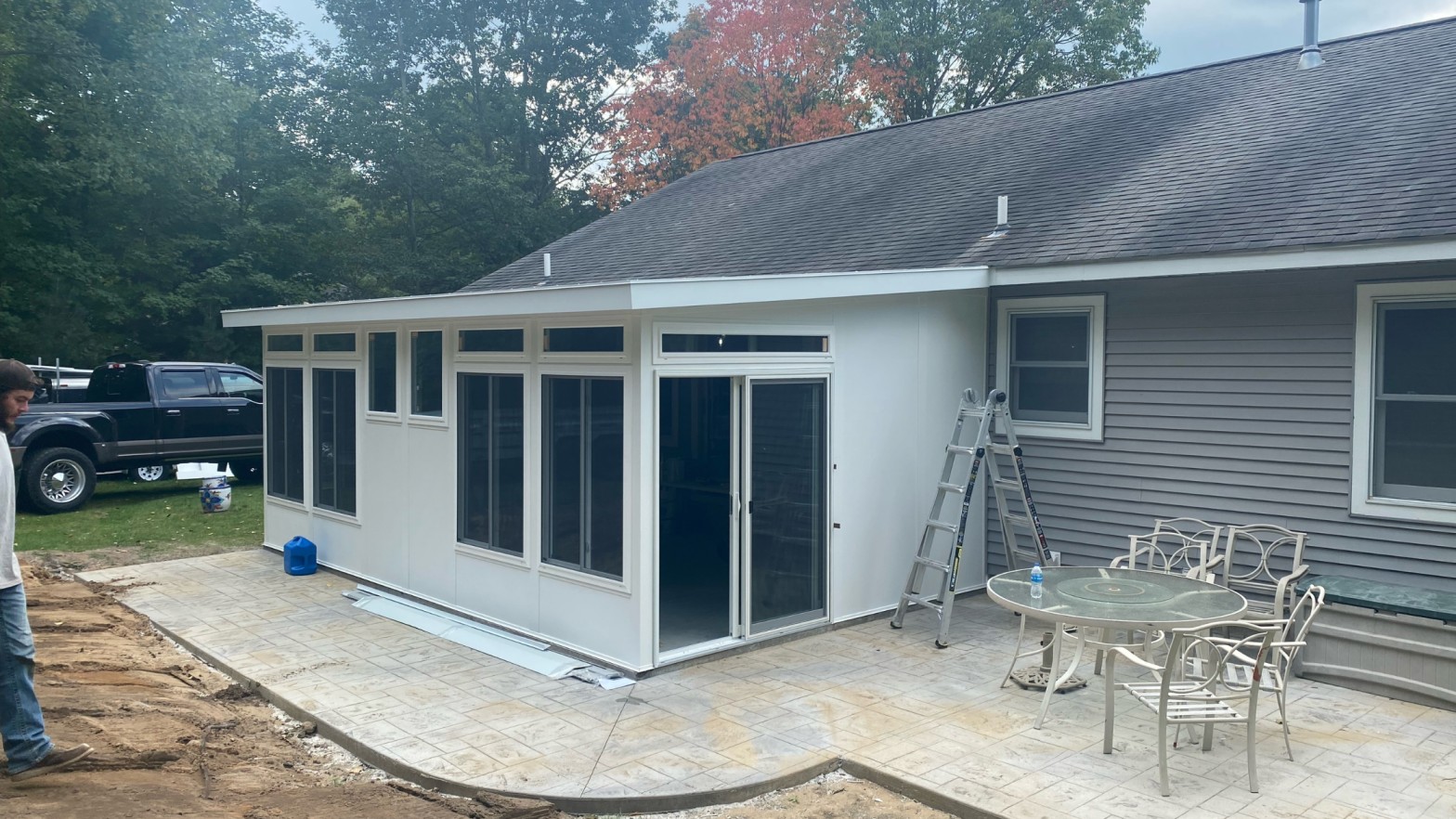
Michigan is precisely the kind of climate where the difference between a seasonal room and a year-round room matters.
Cold outdoor temperatures create a large temperature difference between the interior and exterior of the room. Heat naturally moves toward colder areas, so poorly insulated walls, roofs, floors, windows, doors, frames, and gaps can all become pathways for heat loss.
Large expanses of glass make this especially important in a sunroom. The objective is not simply to install a powerful heater. It is to create a room capable of retaining conditioned air efficiently enough to remain comfortable.
Snow and Ice Matter Too
Winter performance is not limited to temperature.
A Northern Michigan sunroom may also encounter accumulating snow, ice, wind, freeze-and-thaw cycles, and moisture. The roof and supporting structure therefore need to be appropriate for the property and local requirements.
This is one reason sunroom planning should take place before homeowners become focused on finishes, furniture, or window styles.
Permitting and construction requirements can also vary by project and location. Our guide to sunroom permits in Michigan provides a closer look at what homeowners should consider before construction begins.
Insulation Is the Foundation of Winter Comfort
If you want to sit comfortably in your sunroom while snow covers the backyard, insulation becomes one of the most important parts of the design.
The walls are only part of the equation.
A year-round sunroom may need thermal protection across the entire building envelope, including:
- Walls
- Roof or ceiling
- Floor
- Windows
- Exterior doors
- Window and door frames
- Connections between the sunroom and existing home
Weakness in one area can affect the performance of the whole room.
For example, heavily insulating the walls will accomplish only so much if a large percentage of the room consists of poorly performing glass. Likewise, excellent windows cannot compensate for major air leakage or an inadequately insulated roof.
Windows Are Especially Important in a Sunroom
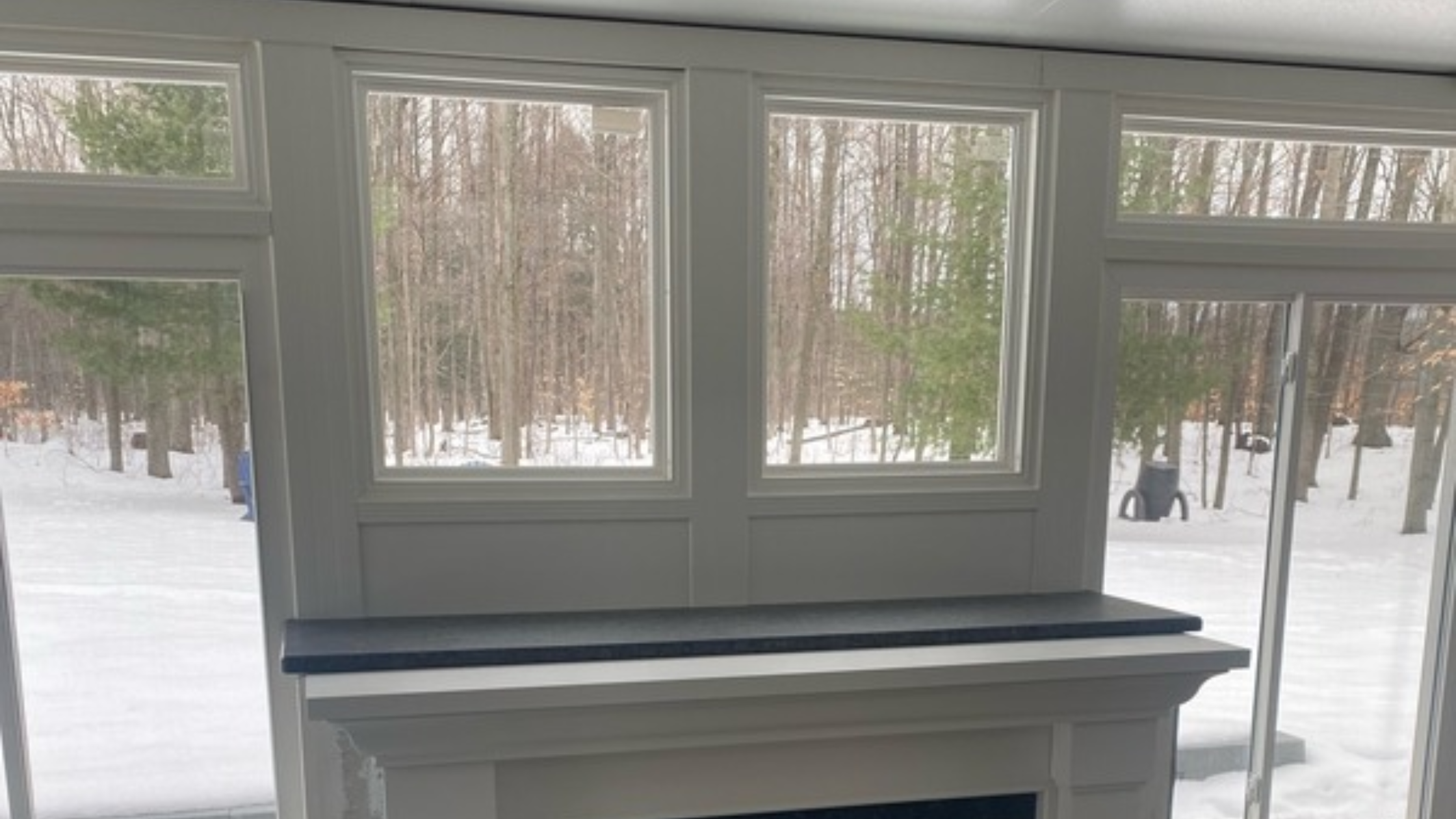
Windows are what make a sunroom feel like a sunroom.
They bring in daylight, preserve outdoor views, and help create the bright, open atmosphere homeowners want. But because a sunroom typically has much more glass than an ordinary room, window performance can have an outsized effect on comfort.
Insulated double-pane or other high-performance glazing can reduce heat transfer compared with basic single-pane glass. Low-emissivity coatings and insulated glass assemblies may provide additional thermal benefits depending on the window system. But windows are still only one part of the system.
Heating and Cooling a Year-Round Sunroom in Michigan
Even a well-insulated sunroom needs a strategy for maintaining comfortable temperatures.
For a year-round sunroom in Michigan, heating is especially important. The right solution depends on the room's size, construction, connection to the existing home, and how frequently you expect to use it.
Depending on the project, heating and cooling options may include extending an existing HVAC system, installing a ductless mini-split, or using another appropriately designed system. The best approach should be determined as part of the overall sunroom design rather than added as an afterthought.
A ductless mini-split can be useful in some sunrooms because it provides both heating and cooling without requiring conventional ductwork. Other projects may be able to integrate the new room with the home's existing system, subject to system capacity and project requirements.
The important point is that HVAC and the building envelope need to work together.
A powerful heating system cannot efficiently compensate for poorly insulated windows, significant air leakage, or other weaknesses in the room.
Summer Comfort Matters Too
Michigan winters tend to dominate conversations about four-season sunrooms, but summer conditions matter as well.
A room surrounded by glass can receive significant solar heat, particularly depending on its orientation and the amount of direct sunlight it receives.
That means year-round comfort requires planning for both ends of the temperature range.
Window selection, ventilation, shading, roof design, air conditioning, and room orientation can all affect how the sunroom performs during warmer months.
A successful four-season room should not simply be warm enough in January. It should also be comfortable enough to enjoy on a sunny July afternoon.
Can You Turn a Three-Season Sunroom Into a Year-Round Room?
This is a common question, particularly among homeowners who already have a seasonal sunroom and find themselves wishing they could use it during winter.
In some situations, upgrading may be possible. However, converting a three-season room into a true four-season space can involve much more than installing a heater.
The existing room may need to be evaluated for:
- Window and door performance
- Wall insulation
- Roof or ceiling insulation
- Floor insulation
- Air leakage
- Foundation and structural conditions
- Electrical requirements
- Heating and cooling
- Local building requirements
The feasibility and scope depend heavily on how the original room was constructed.
If the enclosure was designed specifically as a seasonal space, upgrading multiple components could become a substantial project. In other cases, the existing structure may offer a more suitable starting point.
The key is to have the room evaluated before assuming that a portable heater or other single upgrade will make it suitable for winter.
Floors and Roofs Can Affect Year-Round Comfort
Windows tend to receive most of the attention in sunroom discussions because they are the most visible feature. However, homeowners should not overlook what is above and below them.
A poorly insulated floor can feel uncomfortably cold during winter, particularly when the room is constructed over an exposed or unconditioned area.
The roof or ceiling also plays an important role in thermal performance.
Heat rises, so inadequate insulation above the room can contribute to heat loss during cold weather. During summer, roof design and exposure to sunlight can also influence how much heat enters the space.
This is why a four-season sunroom needs to be considered as an entire enclosure rather than a collection of windows.
What About Condensation and Moisture?
Condensation can become noticeable in cold climates when warm, moisture-containing indoor air meets a sufficiently cold surface.
Windows are often where homeowners notice it first.
A small amount of occasional condensation does not necessarily indicate a major problem, but persistent moisture can signal that indoor humidity, ventilation, surface temperatures, or other building-envelope conditions need attention.
Proper window selection, insulation, air sealing, ventilation, and indoor humidity management can all contribute to better moisture control.
For a sunroom intended for winter use, these considerations are best addressed during design rather than after the room is finished.
Is a Year-Round Sunroom Energy Efficient?

There is no universal answer because sunrooms vary considerably in size, design, orientation, glass area, insulation, HVAC, and construction.
A four-season sunroom has a unique challenge: homeowners want lots of glass because natural light and outdoor views are central to the appeal of the room.
At the same time, glass generally requires careful thermal planning.
That makes product selection and overall design particularly important.
Insulated glazing, appropriate framing, air sealing, insulation, and properly planned heating and cooling can all contribute to improved performance.
Homeowners should think about efficiency as a complete system rather than searching for one feature that makes the room efficient.
The goal is to balance the reason you want a sunroom in the first place, abundant light and outdoor views, with the thermal performance required for Michigan's climate.
How Will You Actually Use the Sunroom?
Before choosing a three-season or four-season design, ask a simpler question:
What do you want to do in the room?
The answer can make the decision much easier.
If you imagine using the room for morning coffee, reading, casual meals, entertaining, or enjoying the backyard primarily from spring through fall, a seasonal room may meet your needs.
If you imagine a home office in January, a family room during the holidays, a year-round reading space, or an everyday extension of your living area, four-season construction becomes much more relevant.
This distinction matters because a year-round room generally requires additional investment.
Homeowners considering the long-term benefits can also review how a sunroom addition may affect Michigan home value when evaluating the role the space could play in their home.
The objective should not be to build the most elaborate sunroom possible. It should be to build the type of room you are actually going to use.
What Makes a Sunroom Truly Usable All Year?
A Michigan sunroom designed for year-round living should bring several elements together rather than relying on one feature.
Here is a practical overview:
Is a Year-Round Sunroom Worth It in Michigan?
Whether a four-season sunroom is worth the investment depends on how much value your household places on year-round usability.
For someone who wants an additional living area that can be used through Michigan's winter, the extra construction required for a four-season room may make sense.
For someone who primarily wants a protected place to enjoy warm-weather views, entertain during summer, or extend the outdoor season into spring and fall, a three-season room may be the more appropriate solution.
There is no reason to pay for year-round capability simply because four-season construction sounds more complete.
There is also little benefit in saving on the initial project if you already know you will be disappointed when the room becomes uncomfortable every winter.
The right investment is the one that aligns the construction with your expectations.
Homeowners who want to understand what happens after the planning stage can review the sunroom installation process in Northern Michigan before beginning a project.
Frequently Asked Questions About Year-Round Sunrooms in Michigan
Can a sunroom really be used during a Michigan winter?
Yes. A sunroom designed as a four-season space can be planned for winter use. Insulation, windows, air sealing, heating, structural design, and the rest of the building envelope all contribute to winter comfort.
Can I heat a three-season sunroom and use it all winter?
Adding a heater may make a three-season room warmer for limited periods, but it does not change how the room was originally constructed. If the windows, walls, roof, or floor were designed for seasonal use, heating alone does not automatically convert the space into a true four-season room.
What is the biggest difference between three-season and four-season sunrooms?
The primary difference is intended use and the construction required to support it. Three-season rooms generally extend outdoor living through the warmer parts of the year. Four-season rooms incorporate additional thermal and climate-control considerations for year-round use.
Do four-season sunrooms need heating and air conditioning?
A room intended for year-round comfort needs an appropriate temperature-control strategy. The specific solution depends on the sunroom and the existing home. Heating is particularly important for Michigan winters, while cooling can help manage summer heat and solar gain.
Are insulated windows enough to make a sunroom usable year-round?
No. Windows are important, but they are only one component. Walls, roof, floor, doors, framing, air sealing, heating, cooling, and overall construction also affect comfort.
Is a three-season or four-season sunroom better for Michigan?
Neither is automatically better. A three-season room can be a practical choice if you primarily want spring-through-fall use. A four-season room is more appropriate when comfortable winter use is an important project goal.
How should I start planning a year-round sunroom?
Start by deciding how you want to use the space and during which months. Then consider the home, site, desired size, comfort expectations, and budget. An on-site evaluation can help determine what type of sunroom is appropriate for the property.
Enjoy Your Michigan Sunroom Through Every Season

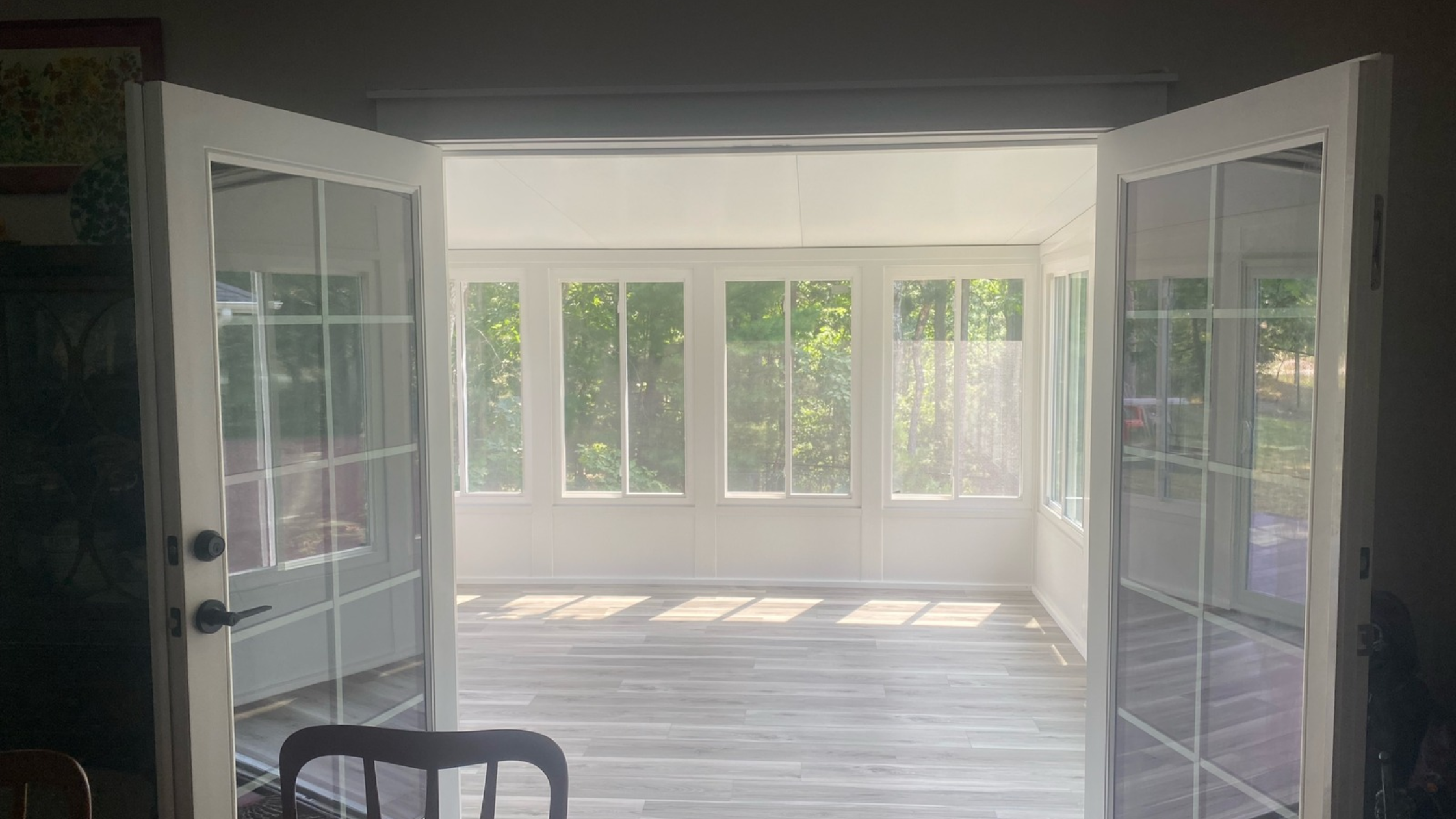
A sunroom can give you something that few other additions provide: a bright living space that keeps you connected to Michigan's changing landscape without requiring you to sit outside in every kind of weather.
For homeowners who want that experience throughout the entire year, the key is planning for it from the beginning.
Windows matter, but so do insulation, floors, roofs, air sealing, heating, cooling, structural requirements, and the way the new room connects with the existing home. A three-season room can be an excellent way to extend outdoor living, but it should not be expected to perform like a space specifically designed for winter conditions.
If your goal is a true year-round sunroom in Michigan, American Awning & Sunrooms can help you explore a design that fits your home, intended use, and comfort expectations.
Ready to start planning? Schedule an on-site sunroom consultation and discuss what year-round sunroom design could work for your Michigan home.


.svg)