
Blogs and insights
Three-Season vs. Four-Season Sunrooms in Michigan: Which Is Worth the Investment?
📅 Published on
September 21, 2026
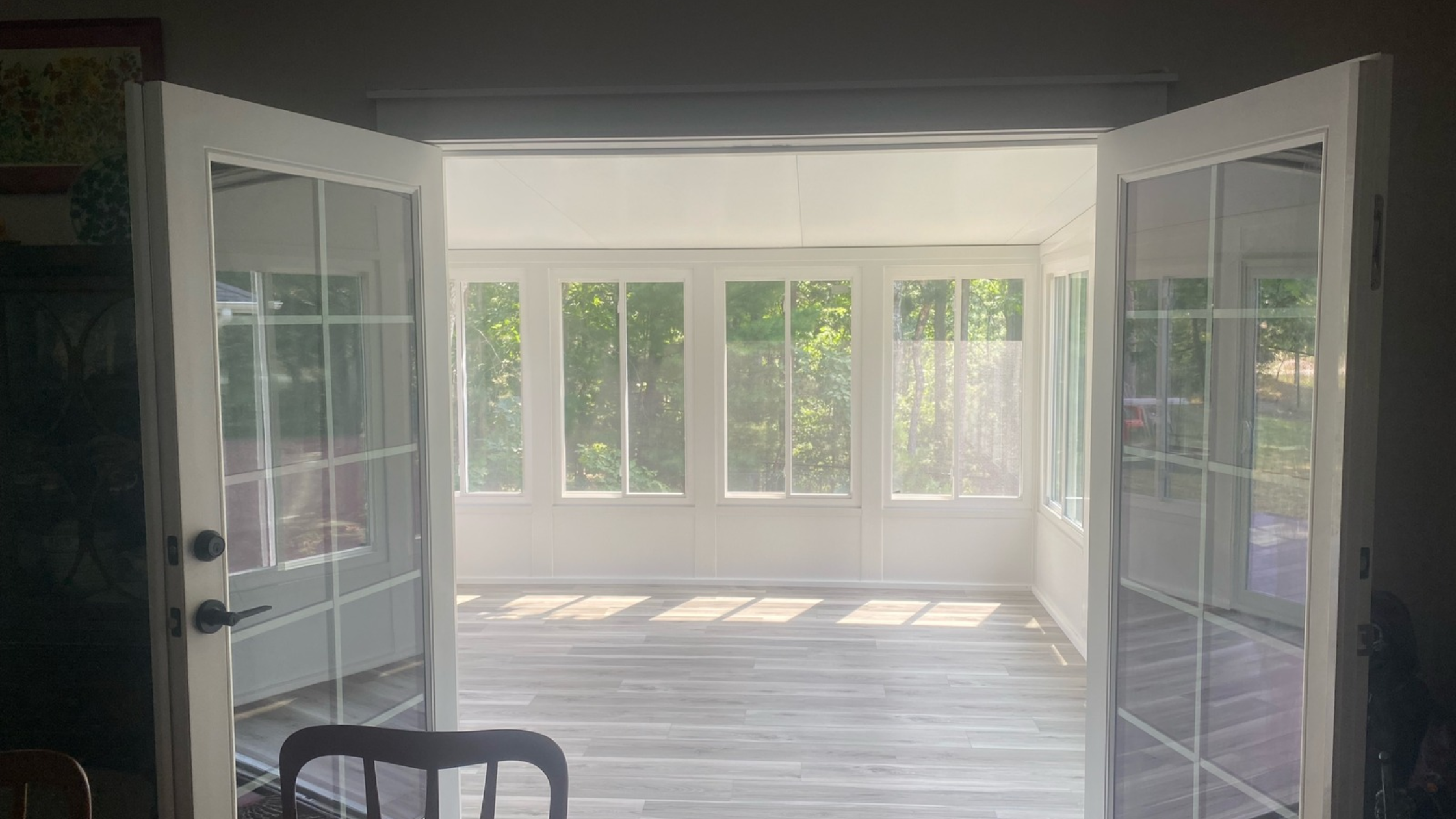
Adding a sunroom can give you more space to relax, entertain, enjoy your property, and bring natural light into your home. But in Michigan, choosing the right type of sunroom involves an important decision: Should you build a three-season or four-season room?
The three-season vs four-season sunroom decision matters more in Michigan than it might in a milder climate. A three-season room is generally designed around spring, summer, and fall enjoyment, while a four-season room is built with greater insulation and climate control so it can function throughout the year. Current Michigan sunroom companies make the same basic distinction, particularly because winter temperatures, snow, and seasonal temperature changes affect how these spaces need to perform.
Neither option is automatically the better investment.
The right choice depends on how you want to use the room, how many months you expect to use it, your budget, the existing home and site, and the level of comfort you expect when Michigan temperatures rise or fall.
This guide compares three-season and four-season sunrooms from the perspective of a Michigan homeowner so you can understand where the additional investment goes and decide which type of space makes the most sense for your home.
What Is the Difference Between a Three-Season and Four-Season Sunroom?
At first glance, the two rooms can look remarkably similar.
Both can feature large expanses of glass, abundant natural light, outdoor views, comfortable seating, and a connection between the home and backyard. The major differences become clearer when you look at how the rooms are constructed and when they are intended to be used.
A three-season sunroom is generally designed for use during spring, summer, and fall. It provides an enclosed environment that protects homeowners from rain, wind, insects, and other outdoor conditions while maintaining a strong connection with the yard.
A four-season sunroom is designed to function throughout the entire year. That typically requires more substantial insulation, higher-performing windows and doors, and a way to heat and cool the space.
Current 2026 home-improvement guidance similarly distinguishes three-season rooms by lighter insulation and seasonal use, while four-season rooms incorporate greater insulation and dedicated climate-control considerations.
American Awning & Sunrooms offers custom sunroom solutions for Northern Michigan homes, making it possible to plan the room around the property and how the homeowner expects to use it.
Three-Season vs. Four-Season Sunroom at a Glance
The table makes one point particularly clear: the higher investment in a four-season room pays for functionality that not every homeowner necessarily needs.
If your ideal sunroom is a comfortable place for morning coffee from spring through fall, paying for full year-round performance may not align with your priorities. If you envision using the room for family gatherings, hobbies, working from home, or relaxing in January, seasonal construction may leave you disappointed.
That is why the decision should begin with intended use rather than price alone.
What Is a Three-Season Sunroom?
A three-season sunroom occupies a useful middle ground between an exposed outdoor space and a fully conditioned home addition.
Large windows allow you to enjoy the surrounding landscape while the enclosure provides protection from rain, insects, wind, and changing weather. Depending on the design, windows may also open to screens so homeowners can bring fresh air into the room on pleasant days.
In Michigan, these rooms are generally intended for spring through fall, although the exact period of comfortable use depends on the weather, the room's construction, orientation, and other factors. Michigan contractors currently describe three-season rooms in much the same way, as spaces that extend outdoor enjoyment without requiring the construction features of a fully conditioned four-season room.
Why Michigan Homeowners Choose Three-Season Rooms
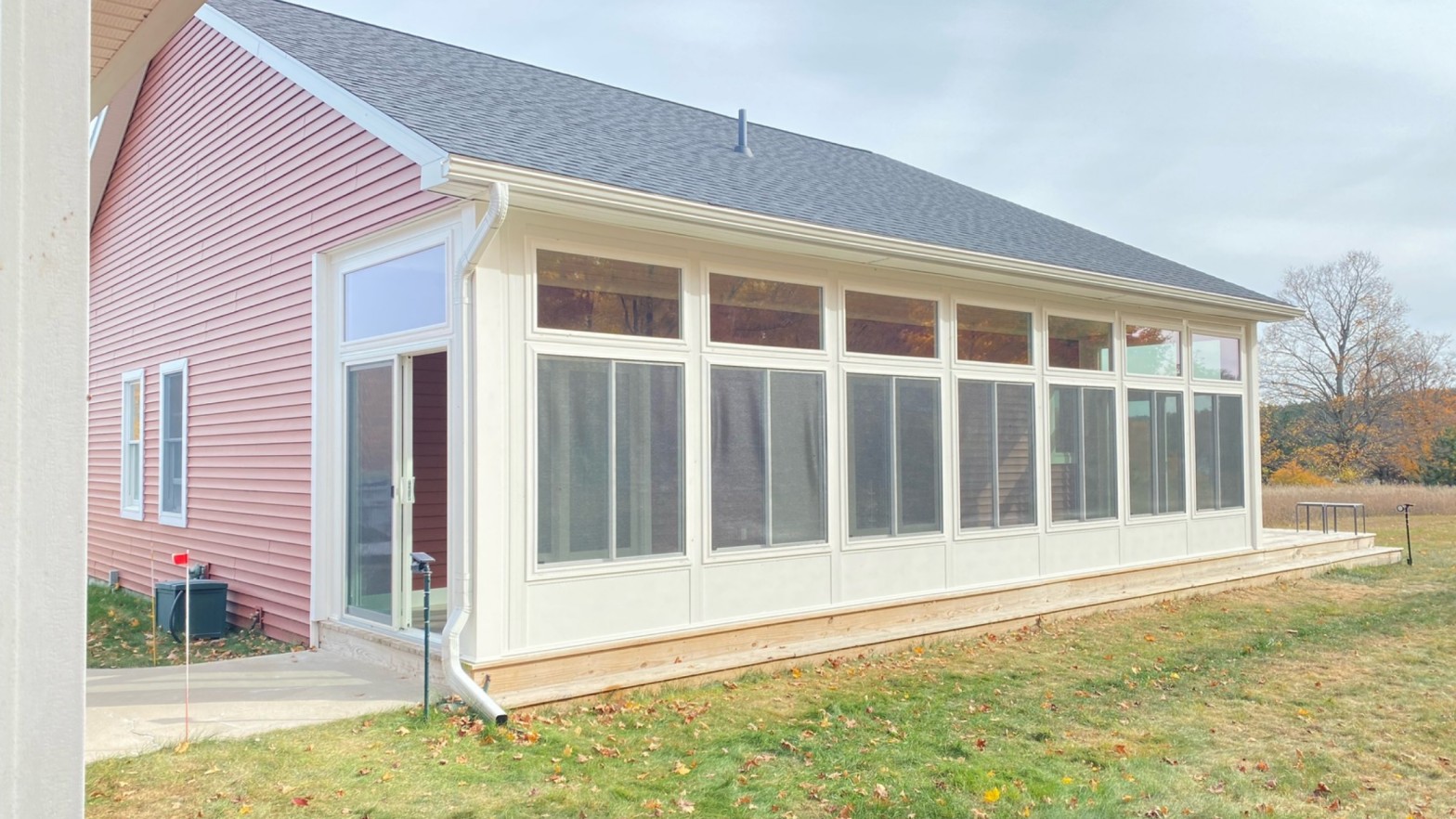
The appeal is straightforward.
You gain considerably more protection than an uncovered patio or deck while maintaining the feeling of being connected to the outdoors.
A three-season room can work especially well as a:
- Morning coffee area
- Casual dining space
- Reading room
- Entertaining area
- Relaxation space
- Place to enjoy lake or woodland views
- Protected transition between indoor and outdoor living
For households that spend much of the winter using other parts of the home, this can provide an appealing balance between functionality and project scope.
There is also an important distinction between a sunroom and a more open enclosure. Homeowners considering several options can compare a sunroom vs. screened-in porch before deciding how much weather protection they actually need.
The Main Limitation of a Three-Season Room
The tradeoff is winter.
A three-season room should not be confused with conditioned year-round living space. Its windows, insulation, wall systems, and climate-control provisions are generally not designed to provide the same winter comfort as a four-season room.
This distinction becomes particularly important in Michigan.
Cold temperatures and snow mean homeowners who expect regular winter use should discuss that expectation before the room is designed. Trying to make a seasonal room perform like a year-round addition after construction can involve more than simply adding a portable heater.
The better approach is to be realistic about your intended use from the beginning.
If you genuinely do not expect to use the room during the coldest months, the seasonal limitation may not be a major disadvantage at all.
What Is a Four-Season Sunroom?
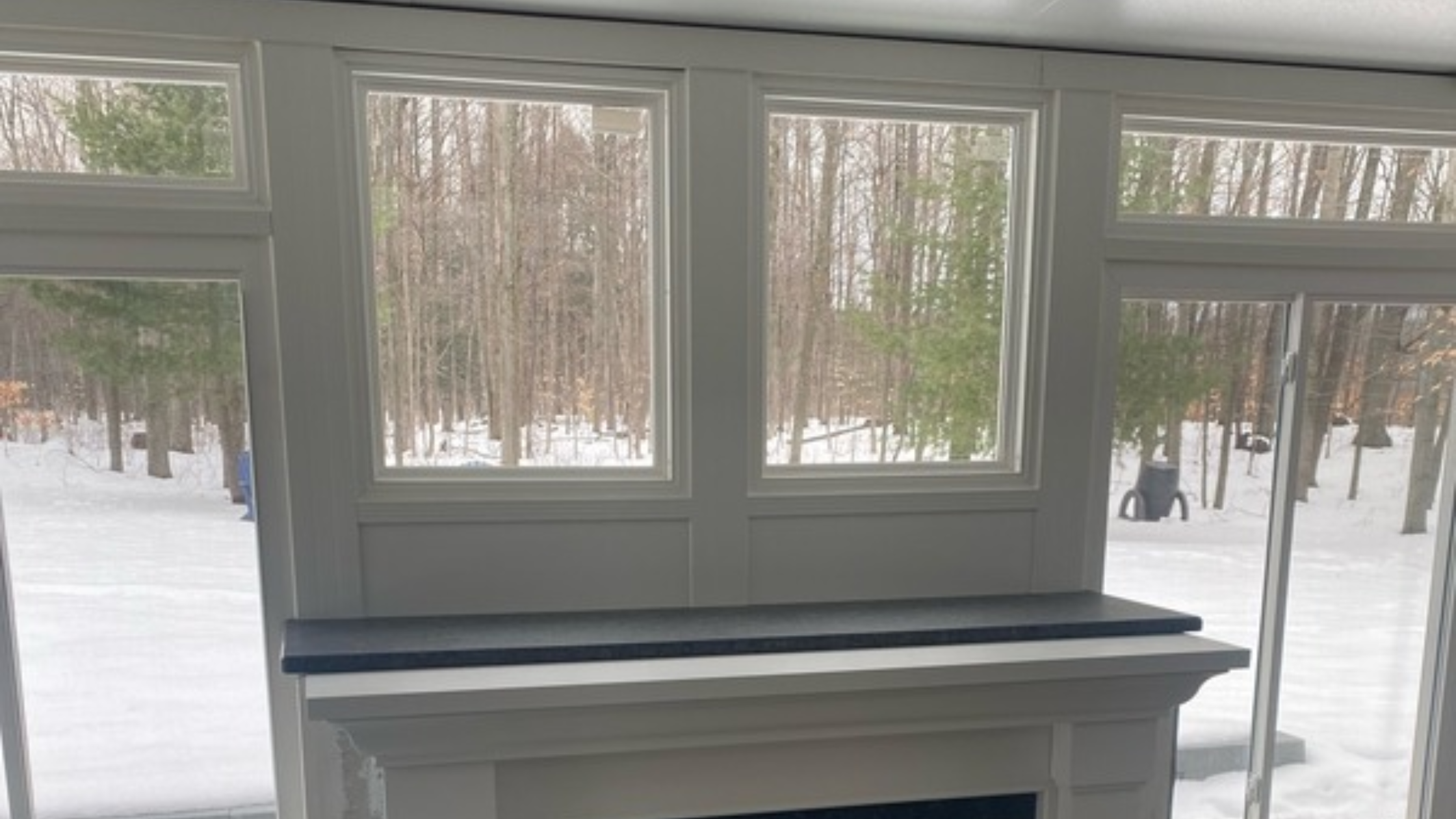
A four-season sunroom is designed to function more like an extension of the home's living space.
You still receive the natural light, large windows, and outdoor views associated with a sunroom, but the construction places greater emphasis on thermal performance and year-round comfort.
That can involve more substantial insulation, insulated glass, improved thermal performance in the framing and roof, and a suitable heating and cooling strategy. Current Michigan sources consistently identify insulation and climate control as central differences between seasonal and year-round rooms.
Why Four-Season Construction Costs More
The additional investment is not simply a premium attached to the words "four-season."
You are paying for additional construction requirements.
Depending on the project, those can include:
- More substantial insulation
- Higher-performance windows and doors
- Insulated roof systems
- Heating and cooling provisions
- Additional electrical requirements
- Foundation or structural requirements
- More complete interior finishes
- Construction designed around year-round comfort
These features can make the room feel more integrated with the rest of the home.
They also explain why homeowners should be cautious about comparing two sunroom estimates based solely on square footage. A 200-square-foot seasonal room and a 200-square-foot conditioned addition may represent substantially different scopes of work.
Three-Season vs Four-Season Sunroom Cost: Where Does the Extra Investment Go?
For many homeowners, cost is where the three-season vs four-season sunroom decision becomes more complicated.
A four-season room generally costs more because it is designed to perform under a wider range of temperatures. The additional investment may include upgraded windows, insulation, structural components, electrical work, heating and cooling, and other features required for year-round comfort.
A three-season room typically has fewer of these requirements. That can make it attractive to homeowners who want more usable space without building what is essentially another conditioned room.
Rather than asking which type is cheaper, a more useful question is: What functionality are you receiving for the additional investment?
Insulation Makes a Major Difference
Michigan's seasonal temperature changes make insulation particularly important.
A four-season sunroom needs greater thermal protection in its walls, roof, windows, doors, and potentially floor system. The goal is to reduce unwanted heat transfer so the room can remain more comfortable when temperatures outside are very different from temperatures inside.
Three-season rooms generally require less extensive thermal performance because they are not intended to function as conditioned living space during the coldest part of winter.
If year-round use is important, insulation is not an area where homeowners should simply choose the least expensive option.
Windows and Glass Affect Comfort and Cost
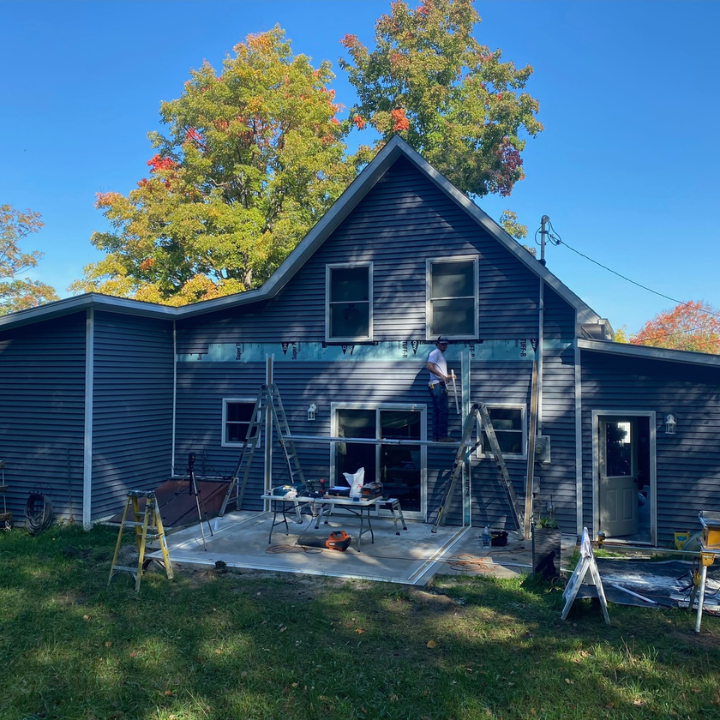
Windows are one of the defining features of a sunroom, but all window systems do not perform the same way.
A room surrounded by glass can gain substantial heat from sunlight and lose heat when outdoor temperatures fall. Four-season rooms therefore generally need higher-performing insulated windows than rooms intended primarily for seasonal use.
Window configuration also affects ventilation. Operable windows can help homeowners enjoy fresh air during mild Michigan weather while still providing the enclosed environment that makes a sunroom useful when conditions change.
Heating and Cooling
A true four-season room also needs a practical strategy for maintaining comfortable temperatures.
The appropriate solution depends on the room, existing home, construction, and how the space will be used. Heating and cooling requirements should therefore be considered during planning rather than treated as an upgrade after construction.
For homeowners who are primarily interested in spring-through-fall enjoyment, paying for year-round climate control may offer limited practical benefit. For someone who expects to use the room regularly in January and February, it becomes central to the project.
How Michigan Weather Changes the Decision
A sunroom that works well in a mild climate does not necessarily have the same requirements in Northern Michigan.
Winter temperatures, snow, changing seasons, and large temperature differences between indoors and outdoors all influence sunroom design. That is one reason homeowners should think carefully about whether they genuinely expect winter use.
American Awning & Sunrooms' existing guide to winter-proofing outdoor living spaces provides additional information for homeowners thinking about year-round performance.
Do You Actually Need Year-Round Use?

This may be the most important question in the entire comparison.
Imagine how you expect to use the room in February rather than how appealing year-round use sounds during the planning process.
Will it become a family room, home office, hobby space, dining area, or everyday extension of your home? If so, the additional investment in four-season construction may support how you actually live.
If you mainly envision morning coffee, entertaining, reading, and enjoying the backyard from spring through fall, a well-designed three-season room may already accomplish your goals.
Permits and Project Requirements Matter Too
Sunroom construction may involve local permits, zoning considerations, setbacks, structural requirements, and inspections depending on the project and municipality.
The exact requirements can vary, which is why homeowners should not assume that a three-season and four-season project will follow identical processes.
Our guide to sunroom permits in Michigan explains this part of the planning process in greater detail. Professional planning early in the project can help identify these requirements before construction begins.
Which Sunroom Offers Better Long-Term Value?
Value is not determined only by how much a project costs.
A room that costs less but rarely gets used may offer less practical value than a more expensive space your family uses every day. Conversely, paying for year-round capabilities makes little sense if you have no intention of using the room during winter.
That is why the better investment depends heavily on use frequency, lifestyle, and long-term plans for the home.
A thoughtfully designed sunroom may also make a home more appealing by adding usable space and strengthening the connection between indoor and outdoor living. Homeowners interested in that aspect can explore how a sunroom addition may affect Michigan home value.
However, homeowners should avoid treating any remodeling project as a guaranteed financial return. Lifestyle value, enjoyment, functionality, construction quality, and the needs of future buyers can all affect the outcome.
Three-Season or Four-Season: Which One Fits Your Priorities?
A simple way to approach the decision is to compare what you actually want from the room.
Neither column represents the universally better choice. The goal is to avoid paying for features you will not use while also avoiding a room that cannot deliver the comfort you expect.
Frequently Asked Questions About Three-Season vs Four-Season Sunrooms
Can you use a three-season sunroom in winter in Michigan?
A three-season room may be usable on some milder or sunny winter days, but it is not designed to provide the consistent winter comfort expected from conditioned living space. Homeowners planning regular winter use should discuss four-season construction from the beginning.
Is a four-season sunroom more expensive?
Generally, yes. Greater insulation, higher-performing windows, climate control, structural requirements, and additional finishing can increase the project scope and cost.
Does a four-season sunroom add more value?
Not necessarily in every situation. A four-season room provides greater year-round usability, but the value of either project depends on construction quality, the home, local market, design, and how useful the additional space is to the homeowner or future buyer.
How long does sunroom installation take?
Timelines vary according to design, site conditions, permitting, materials, and project complexity. Homeowners can review the sunroom installation process in Northern Michigan to better understand what may happen from planning through completion.
Which sunroom is better for Michigan?
Neither type is universally better. A three-season room can make sense for homeowners seeking extended seasonal outdoor living, while a four-season room is designed for households that place greater value on year-round use.
Choose a Sunroom Around the Way You Want to Live

The three-season vs four-season sunroom decision ultimately comes down to how much functionality you want from your new space.
If spring, summer, and fall enjoyment meets your needs, a three-season room can provide natural light, outdoor views, and protection from the elements without requiring all the features associated with conditioned living space.
If you want to enjoy that same connection with your property throughout a Michigan winter, investing in the insulation, windows, construction, and climate control associated with a four-season room may better support your goals.
American Awning & Sunrooms can evaluate your home, discuss how you expect to use the space, and help you explore an appropriate design. When you are ready to compare options for your property, schedule an on-site consultation.


.svg)